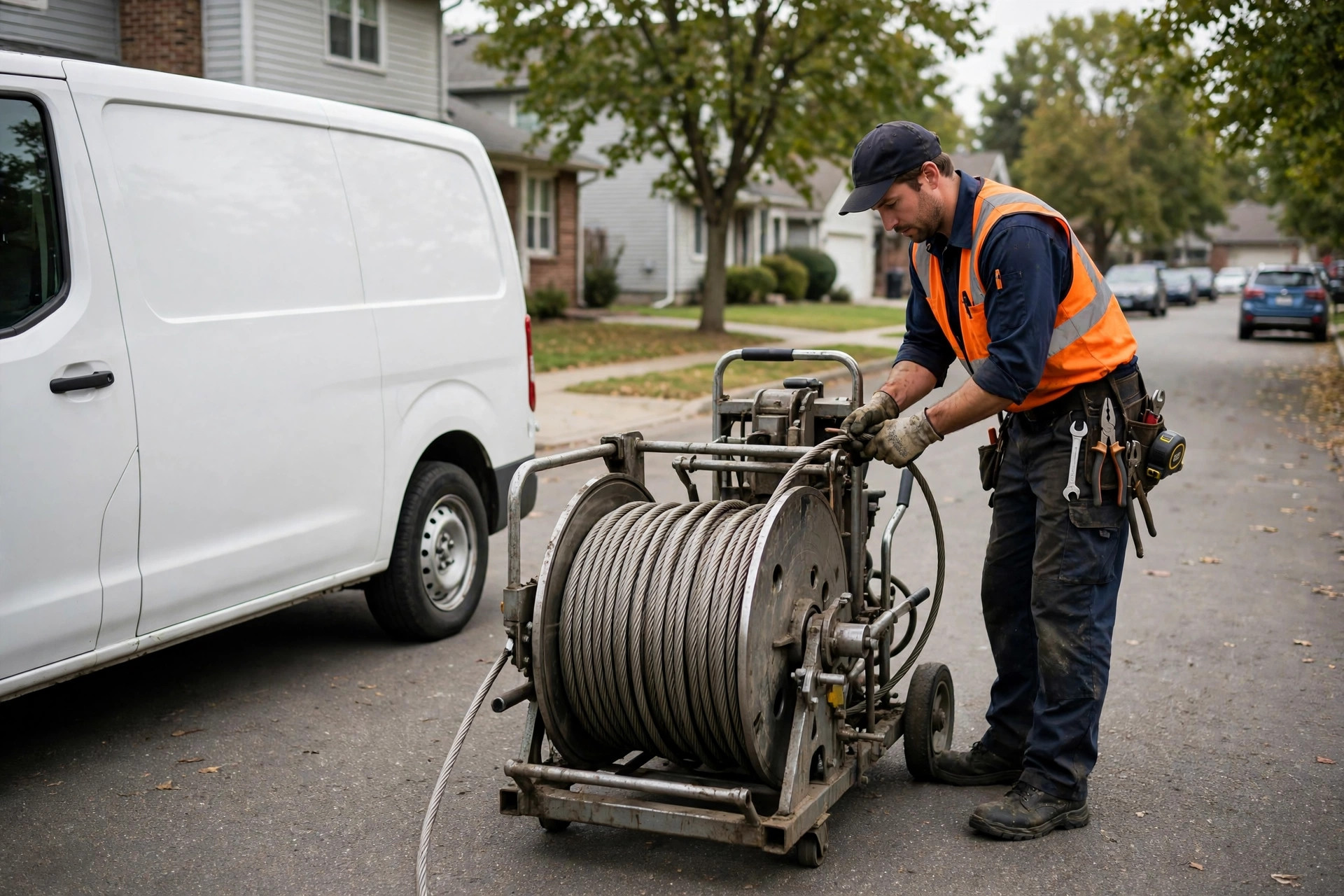
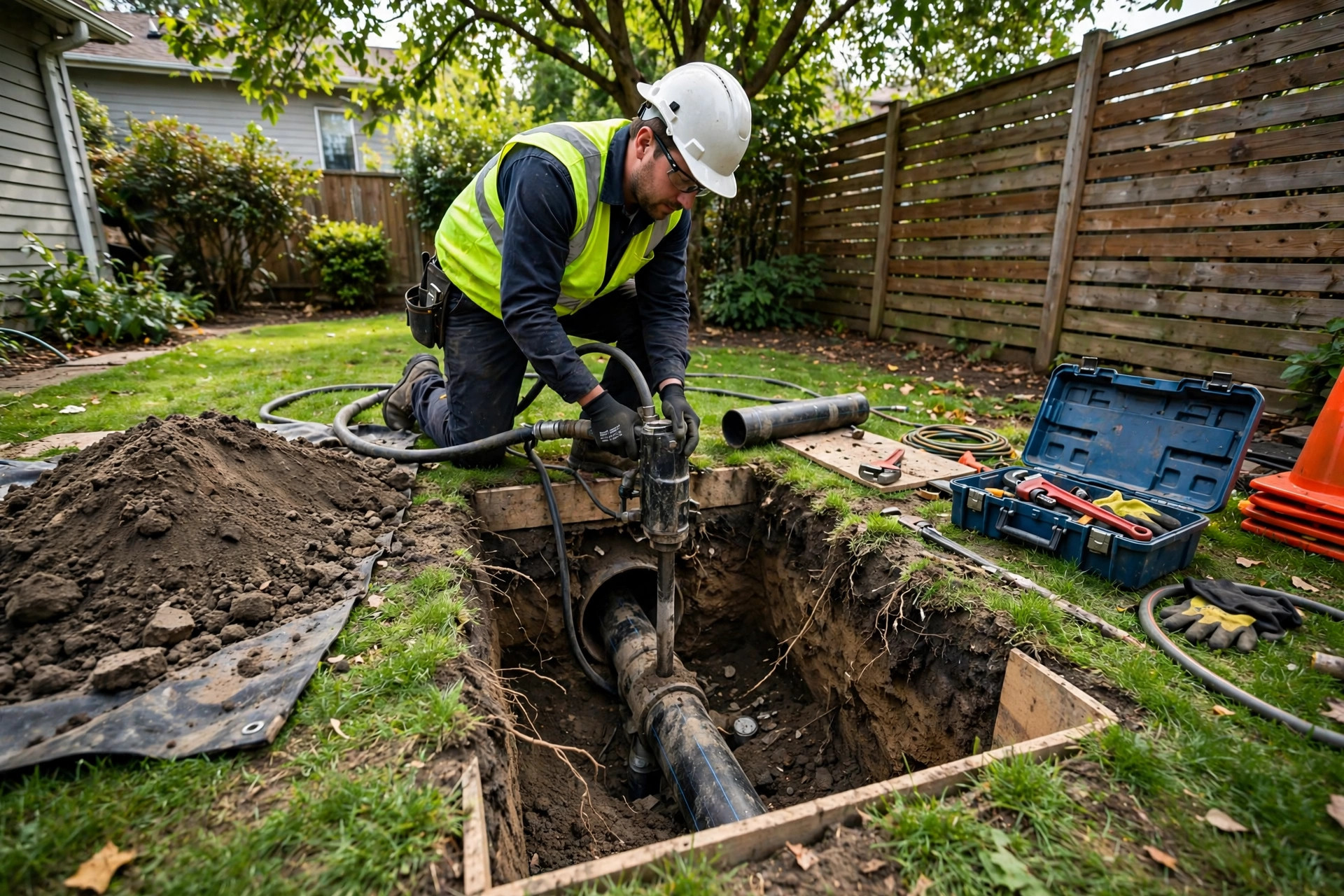
Sewer line trouble in Coconut Creek? We find the exact problem with a camera you watch live. Then we fix it, usually without tearing up your yard.
No spam. No obligation. Just practical help.
Camera proof first, then written options. No work before you approve it.
We protect your landscaping and leave the yard as close to untouched as possible.
Written for Coconut Creek soil, roots, and codes. Not generic advice.
Your call connects you with an independent local technician serving Coconut Creek.

Coconut Creek Sewer Pros handles sewer repairs across Coconut Creek, FL. From root intrusions near Tradewinds Park to aging lines in Winston Park, we diagnose with cameras and fix with minimal digging.
Coconut Creek sits on sandy South Florida soil with a high water table. That combination is rough on buried pipes. Sand shifts. Groundwater presses in. And the mature banyans and live oaks along Lyons Road and Wiles Road send roots hunting for moisture. Roots find the tiniest joint in a clay or cast iron line and move in.
Older homes near the Coconut Creek Parkway corridor often still run on original clay or cast iron laterals. Newer builds in Banyan Trails and Sabal Pines usually have PVC, which resists roots better but can still belly or separate where the sandy soil settles. Every neighborhood has its own pattern. We have seen them all.
That is why we never quote blind. A camera inspection shows the pipe material, the exact defect, and how deep it sits. You watch the footage with us. Then you choose the fix with real information, not a guess.
One slow sink is usually a local clog. The sewer line is suspect when several fixtures act up at once. Watch for these signs around your home.
If two or more of these show up together, call before it becomes a backup. A camera inspection takes under an hour and ends the guessing.
Most Coconut Creek homeowners dread one thing: a trench across the lawn, the driveway, or the paver patio. Trenchless methods were built to avoid exactly that. Here is how the two approaches compare.
| Factor | Trenchless | Traditional dig |
|---|---|---|
| Yard damage | One or two small access pits | Open trench along the full run |
| Typical timeline | One day for most homes | Several days plus restoration |
| Driveways and patios | Usually untouched | Often cut and re-poured |
| Best for | Cracked, root-filled, or aging but intact pipe | Collapsed sections or lines that must move |
| Restoration cost | Minimal | Landscaping, sod, and concrete add up |
Usually not. Pipe lining cures a resin sleeve inside your existing line, creating a smooth new pipe within the old one. Pipe bursting pulls a new HDPE line through while fracturing the old pipe outward. Both need only an entry pit and an exit pit.
That means the royal palms by your Wiles Road driveway stay put. The paver patio stays put. Most of our trenchless jobs finish in a single day, and you can use your plumbing that evening.
Camera-first diagnosis, trenchless repair options, and honest upfront options for every sewer problem.

A camera through your line shows the exact problem. Roots, breaks, bellies. You watch it live on screen.

Pipe lining and pipe bursting fix lines from the inside out. No trench across your lawn.

Full replacement when the line is beyond repair. Permitted and inspected.
After years working from Johnson Road to the Hillsboro border, we see the same handful of problems again and again.
We stop active backups fast, clear the blockage, and fix the underlying line failure. Then we verify with a camera.
South Florida roots love old clay and cast iron. We cut them out, then line or replace the pipe so they cannot return.
A broken line leaks into sandy soil and the smell surfaces fast. Camera inspection finds the break. Trenchless repair seals it.
Homes near Sabal Pines Park and the older sections of Winston Park call us most for root intrusion. Newer communities like Cocobay and Lyons Gate tend to call about bellies, where sandy soil has settled under a PVC joint. Different soil behavior, different fix. The camera tells us which.
No. Honest answer. A fully collapsed section cannot be lined or burst because there is no pipe left to follow. A severe belly that needs re-grading needs open excavation to reset the slope. And a line that must change route needs a new trench.
Anyone who promises trenchless over the phone has not looked at your pipe. Our camera inspection shows exactly which category you are in. Then we quote the right fix, not the easy one.
In most Broward County cities, including Coconut Creek, the homeowner owns the lateral from the house all the way to the city main. That includes the stretch under the sidewalk and the street.
We mark the defect location on camera footage and measure its distance from your cleanout. If the break sits on the city side of the connection, we tell you plainly and point you to the right city department. No charge for honesty.
Every line is different, so beware flat quotes given sight unseen. These are the real factors that move the number.
| Factor | Why it matters |
|---|---|
| Length of the repair | A 10 foot spot fix and a 60 foot replacement are different jobs |
| Depth of the pipe | Deeper pipe means bigger pits and more labor |
| Pipe material and condition | Collapsed Orangeburg or clay costs more to replace than lining sound PVC |
| Access and obstacles | Pools, patios, and mature trees near Lyons Road lots complicate access |
| Method | Trenchless usually wins once restoration is counted |
| Permits | Broward County permits add a fixed administrative cost |
We quote a written range after the camera inspection. The number does not move unless the scope changes and you approve it first.
These are typical ranges from national cost data for 2026. Your price depends on what the camera shows.
| Service | Typical range |
|---|---|
| Sewer camera inspection | $300 to $400 |
| Spot repair, one damaged section | $1,500 to $4,000 |
| Trenchless lining (CIPP), per foot | $80 to $250 |
| Pipe bursting (trenchless), per foot | $60 to $200 |
| Traditional dig and replace, per foot | $50 to $250 |
| Full sewer line replacement | $1,551 to $6,631 |
Ranges are from Angi 2026 national data, for planning only. Call us for a written price for your home after the inspection. No surprises after work starts.
Usually not for wear and tear. Standard policies exclude pipes that simply aged out. Sudden accidental damage is sometimes covered, and some insurers sell a buried utility line endorsement that specifically covers laterals.
Ask your agent about that endorsement before you need it. If you do file a claim, our camera footage and written findings give the adjuster documented proof of what failed and why.
Yes, when the rest of the line is sound. This is called a spot repair, or sectional point repair. It treats one short damaged length, usually two to six feet, instead of the whole lateral.
A short liner soaked in resin is placed over the defect on an inflatable packer. It is pressed against the pipe wall and cured in place. The rest of your line is untouched.
Spot repair fits when the camera finds one clear defect. A single root filled joint under a parkway tree. A joint crushed where a driveway was poured over it. A break where the lateral crosses another utility trench. These are common in Coconut Creek, where banyan roots hunt for one weak clay joint and sandy soil shifts under driveways.
Spot repair does not fit when the damage runs the whole line. A line with cracks at every joint needs full lining or replacement. A collapsed section cannot be lined at all. A belly that needs regrading needs open digging. The camera tells us which case you are in before anyone quotes.
Because the camera and locator mark the defect within inches, the work stays small. One access point. No trench across your yard for a two foot fix.
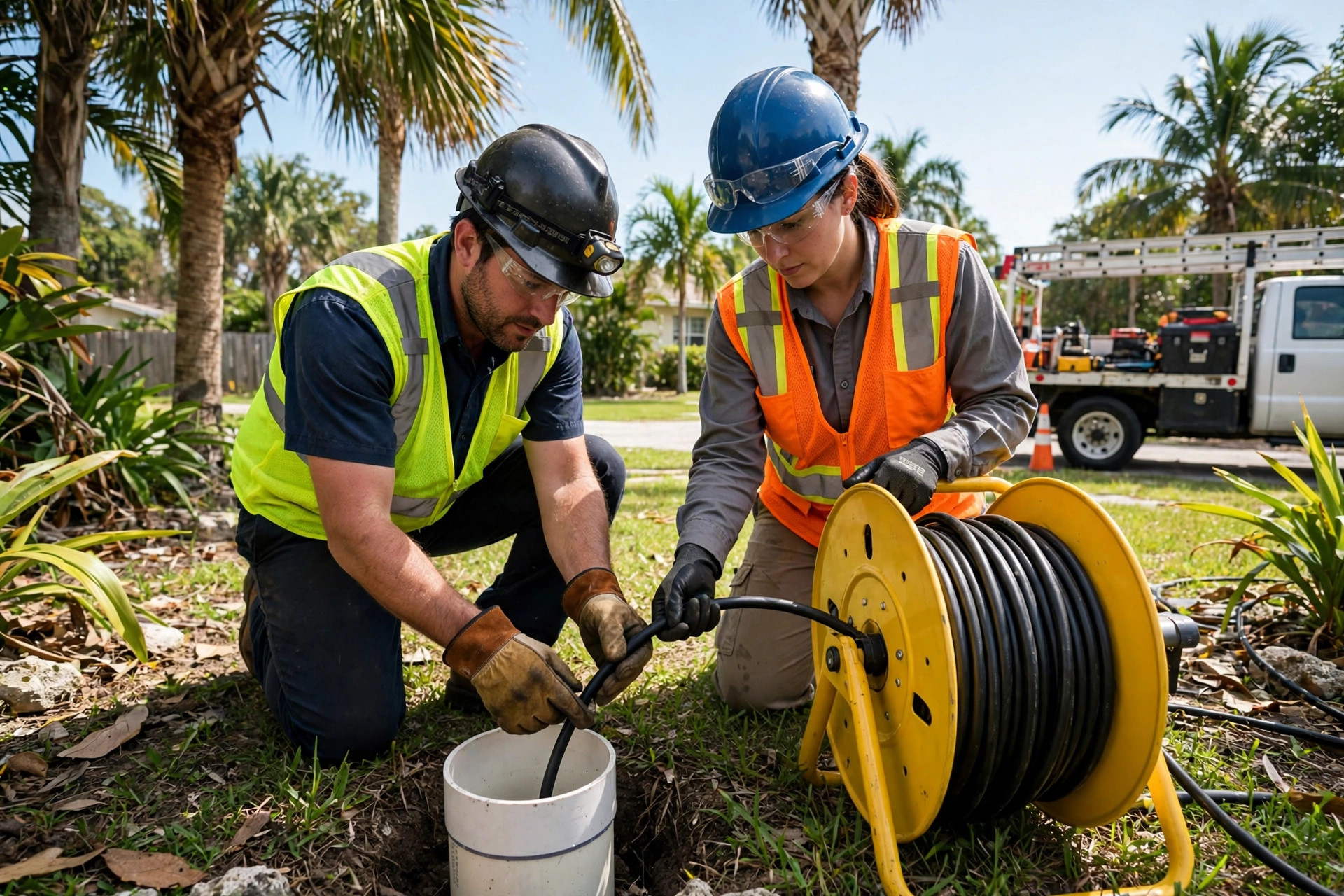
Hydro jetting clears a sewer line with high pressure water. A nozzle sprays water in all directions as it moves through the pipe. It strips grease, roots, and buildup off the walls.
Jetting is the right fix when the pipe itself is intact but blocked. Recurring clogs. Slow drains across the house. Grease and root buildup narrowing the line. Many Coconut Creek homes with older clay laterals and heavy root growth see this pattern.
Jetting is not a repair. It cannot fix a cracked, collapsed, or bellied pipe. That is why we run the camera after jetting. If the pipe is sound, you are done. If the camera shows a break or a belly, we talk about lining, spot repair, or replacement with real footage in front of you.
Jetting first also makes every other fix more accurate. A clean pipe shows its true condition on camera. No guesswork hiding under buildup.
Proudly serving Coconut Creek and surrounding neighborhoods, from the Turnpike to the Palm Beach line.
We cover ZIP codes 33063, 33066, 33073, and 33097.
Yes. A standard home inspection does not look underground. A sewer scope finds crushed sections, root mats, and bellies that can turn into a five figure repair the month after closing.
We scope homes all over Coconut Creek for buyers, especially around the older streets off Coconut Creek Parkway. It takes under an hour. The footage goes to you and your agent the same day.
See the problem, choose your fix, watch us solve it. Most jobs finish in a single day.

We run a camera through the line and show you exactly what is wrong, where, and how deep.
Trenchless vs. traditional. You get honest options with upfront pricing before anything starts.
Most jobs done in a day with minimal digging. Permits and inspections handled.
We run the camera again to prove the line is clear and flowing perfectly.
No. Stop running water and avoid flushing until the line is checked. Every gallon you send down has nowhere to go. It can push sewage back up through the lowest drain in the house.
Stay clear of standing sewage and keep it away from electrical equipment. Then call us. We prioritize active backups the same day.
Most residential trenchless jobs finish in one day. Lining cures in a few hours. Pipe bursting is similarly quick once the pits are open.
Traditional dig and replace takes longer. Excavation, pipe laying, backfill, compaction, and then restoration of sod or pavers. That restoration phase is where trenchless really pulls ahead on total time.
It depends on the pipe material. Here is what plumbers usually see in South Florida.
| Pipe material | Typical lifespan |
|---|---|
| PVC | 50 to 100 years |
| Cast iron | 50 to 75 years |
| Clay | 50 to 60 years |
| Orangeburg (fiber pipe) | About 30 years |
Coconut Creek's sandy soil and aggressive tree roots can shorten these numbers. A camera inspection shows where your line actually stands, whatever its age.
Yes, in most cases. Broward County requires permits for sewer repair and replacement. The work must meet local plumbing code and pass inspection.
The technician who does your job pulls the permit and schedules the inspection. Ask to see the permit card before work starts. Unpermitted sewer work can cause problems when you sell the home.
Drain lines run inside your house. They carry water from sinks, tubs, and toilets to one exit point. The sewer line, also called the lateral, is the large pipe that carries everything from that exit point to the city main under the street.
Clogs in one fixture usually mean a drain line issue. Problems in several fixtures at once point to the sewer line. The fix, the cost, and the permit are different for each.
Practically no. Sewer replacement needs a permit, an inspection, and in Florida a licensed professional. The pipe sits several feet down and must slope exactly right.
A bad slope means sewage does not flow. A broken city connection means fines. This is one job where DIY costs more than hiring it out.
The licensed pro who does your job sets their own warranty. Ask about it in writing before any work starts.
We are new in Coconut Creek. Our reviews are being written one job at a time.
When we finish a repair, we ask the homeowner for an honest review. Good or bad, we want to hear it. That is how a local company earns trust.
Had us out for a sewer repair? Tell us about it.
Do not wait for a small issue to become expensive damage. Get a camera inspection and a written plan today.
Call (954) 555-0173 Now